Myfanwy’s letters
The RookMyfanwy’s letters are a hand-built guide across the gap between the original Myfanwy Thomas and the amnesiac successor who wakes in her body. Written before the loss of memory she expects, they turn a private act of preparation into a serial narrative: each message gives its reader a foothold in a life she cannot remember, while withholding some information until she is ready to receive it. Their central purpose is not simply to restore the former owner’s story, but to equip the new occupant to choose whether that story will become her own.
Form and Intended Reader
The letters address their recipient as “You,” not as Myfanwy. The writer explains that calling the successor by her own name would feel like imposing an identity on someone who has inherited the body but not the memories. That distinction establishes the letters’ defining tension: the body belongs to a continuous life, but the person who must act within it cannot assume that continuity is hers. The former Myfanwy offers knowledge without claiming that the reader must accept her selfhood wholesale.
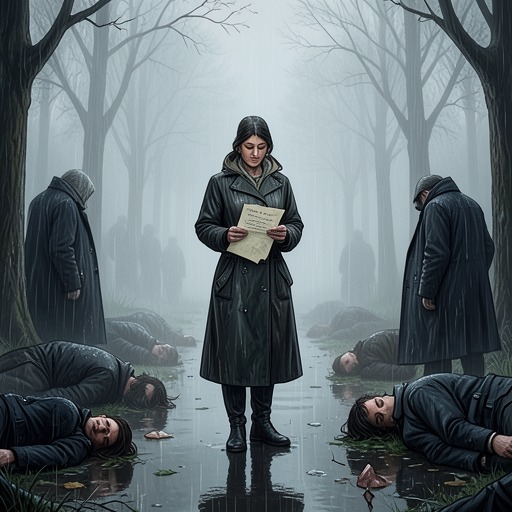
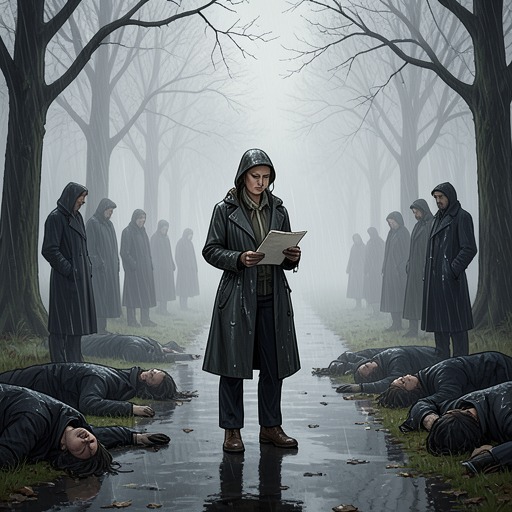
The sequence is planned for an uncertain future. Myfanwy knows she will lose her memory but does not know why, and she cannot be certain that the intended reader will find or read any particular message. She therefore puts copies of the early letters in every coat and jacket she owns. The letters’ form responds to the possibility of interruption: they may reach their reader out of order, or not at all, and must make sense amid an unfolding emergency rather than in the calm of a complete autobiography.
Instructions for Immediate Survival
The earliest guidance addresses the body and its immediate needs. Myfanwy identifies herself by name and points to personal details that may help the reader recognize the body’s past, including a scar on the inner left thigh from a childhood fall and a filling in an upper tooth. She warns that a bee sting could be fatal without prompt treatment and tells the reader where to find epinephrine injectors: in the purse, the car’s glove compartment, and her jackets. These concrete instructions make the body more than a vessel for an abstract identity; it comes with specific vulnerabilities that the new occupant must manage.
The letters also establish a way to pass unnoticed. Myfanwy directs the reader to use a wallet containing cards in the name of Anne Ryan, including a bank card, credit card, and driver’s license, and gives the identification number needed to access them. She recommends withdrawing money and checking into a hotel under that identity. Elsewhere she advises the reader to take two suitcases to a safe address, use an enclosed key, and avoid being followed. The instructions shift between ordinary practicalities and high-stakes precautions because the crisis makes both kinds of knowledge necessary.
The Threat and the Choice
The letters explain that memory loss will not end the danger. Myfanwy predicts that she or her successor will be attacked; the attackers will wear latex gloves, and the reader will fight back and survive. She treats the gloves as a significant clue, while admitting that she does not yet know who has arranged the attack or why. Her suspicion falls on someone who should be trustworthy, and she allows that the reason might concern something she has not yet done. The warning gives the successor a reason to distrust the organization and relationships she has not had time to understand, without resolving the mystery for her.
Myfanwy makes the successor’s first major decision explicit rather than making it on her behalf. One option is to leave the country and build a new life using money, instructions, and lists of names prepared for that purpose. The other is to take over Myfanwy’s life, investigate the betrayal, and inherit its wealth, authority, and knowledge, accepting the danger that comes with them. The two options are represented by separate lockboxes at Mansel Bank on Bassingthwaighte Street in the City: 1011-A contains the materials for departure, while 1011-B returns the reader to Myfanwy’s life. Myfanwy regards either choice as understandable; the unfairness lies in requiring the amnesiac to choose under pressure at all.
A Sequence That Responds to Events
Later letters adjust to what the reader has already chosen and experienced. Myfanwy predicts that the person who opens one message will probably have been under intense stress and will have discovered that touching someone’s skin can cause effects such as paralysis, blindness, or loss of speech. She describes this first manifestation as an undeniable opening of a new capacity within the body. Because the reader has chosen to continue rather than take the prepared escape route, the letter welcomes that decision and gives the next practical direction: take both suitcases to the arranged address and open another envelope once established there.
The safe apartment is itself part of the preparation. Myfanwy says she spent a long time arranging it without attracting notice, despite the surveillance under which she and now her successor live. The letter was written there, on one side of the couch; the successor later notices the place where the former Myfanwy sat. The modest domestic detail places the reader in a space made for her by someone she cannot meet, making the writing site a material link between separate versions of the same life.
The messages also regulate the reader’s entry into work. A later instruction explains that the successor has chosen not to leave and must therefore report to the office, where someone is trying to kill her. Myfanwy points her to the thick purple binder in the suitcase, which describes the Checquy and the reader’s work, and distinguishes what to do on a workday from what to do on a weekend. The guidance is deliberately staged: it does not deliver the entire institutional history at once, but gives the reader a next action and a reference source as the new life becomes unavoidable.
Memory, Identity, and Inheritance
The letters’ practical detail coexists with a personal record of the former Myfanwy. She describes a tidy, comfortable life whose private routine includes sitting on the couch with popcorn and working through lengthy files. She also summarizes the abrupt contrast between that quiet domestic pattern and the dangerous, complicated responsibilities attached to her role. The line “I’m not bipolar, I’ve just had a bipolar life foisted upon me” condenses this contrast into a joke about circumstance: the instability belongs to the life imposed on her, not to a diagnosis she claims for herself.
The correspondence turns memory into something that can be transmitted without being restored. It cannot make the successor remember childhood or former habits; instead, it supplies facts, warnings, and choices that the reader can use in the present. A recollection of being sent away to the Estate as a child begins with a meal and a conversation with Lady Farrier and Sir Wattleman, then follows the young Myfanwy’s journey away from London. Placed among urgent instructions for an adult facing danger, this childhood account makes clear that the inherited life began with an earlier removal and a decision made by others.
As an object, each letter is both a message and a contingency plan. Its placement in coats, suitcases, and a prepared apartment anticipates that the intended reader may be frightened, displaced, or unable to rely on ordinary channels of help. Yet the messages do not simply dictate who she must become. They preserve the former Myfanwy’s knowledge while leaving the consequential choice—and the work of making a self from that knowledge—to the person reading them.